Ergonomic Workplace Setup: Simple Changes That Make a Big Difference
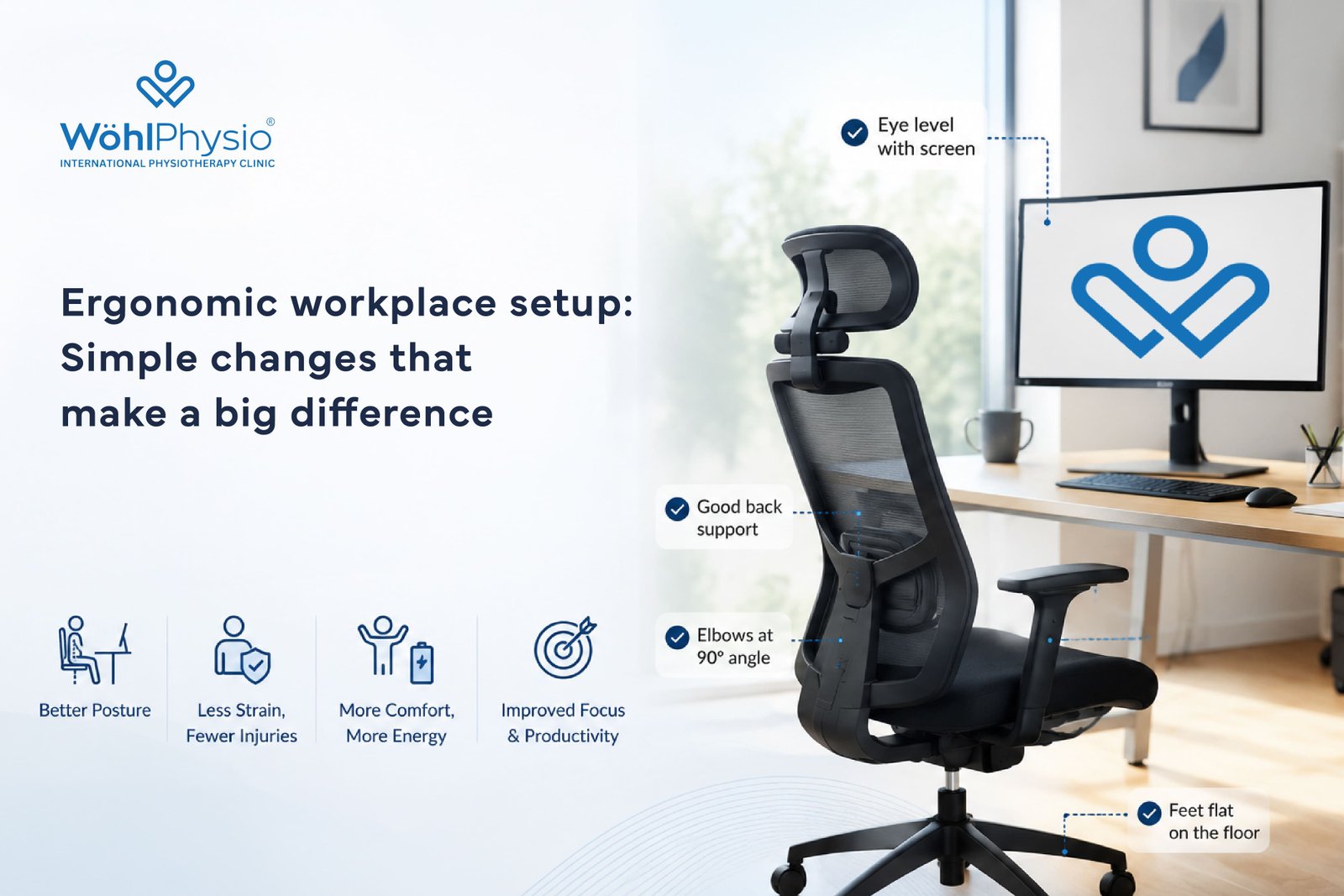
Most workplace pain doesn't start with an injury; it starts with a chair, a screen height, or a keyboard angle that's slightly wrong, repeated eight hours a day, five days a week. Over months, "slightly wrong" adds up to stiff necks, aching lower backs, and shoulder pain that never quite goes away.
The good news: you rarely need an expensive overhaul to fix it. A handful of simple, well-placed ergonomic changes can prevent the majority of desk-related pain before it starts. Here's what actually matters, and when it's time to bring in a physiotherapist.
Why Ergonomics Deserves More Attention Than It Gets
Ergonomics is simply the science of setting up your workspace so your body works with it, not against it. When your setup is wrong, your muscles and joints quietly compensate by rounding your shoulders forward, tilting your neck down, straining your lower back for hours at a stretch. None of it hurts at the moment. All of it adds up.
We've written before about how this plays out for specific groups: IT professionals spending long hours at a desk, remote workers, and even teachers who spend the day standing or hunched over desks. The pattern is the same across every profession: sustained poor posture is one of the most common and most preventable causes of chronic pain we see at WohlPhysio.
Simple Ergonomic Changes That Make a Real Difference
1. Get Your Screen to Eye Level
The single biggest contributor to neck strain is looking down at a screen. Your monitor's top edge should sit roughly at eye level, about an arm's length away. If you work on a laptop, a stand plus an external keyboard is a far better investment than it sounds. It stops the constant downward tilt that overloads the neck. This is exactly the strain we cover in why neck pain increases after long hours of mobile and screen use.
2. Support Your Lower Back
A chair without proper lumbar support forces your lower back into a slouched, unsupported curve for hours. Use a chair with adjustable lumbar support, or add a small cushion at the small of your back. Feet should rest flat on the floor (or a footrest), with knees roughly level with your hips.
3. Keep Elbows at a Right Angle
Your keyboard and mouse should sit at a height that keeps your elbows close to your body at around 90 degrees. Reaching up or down to type all day strains the shoulders and wrists, a common precursor to conditions like tennis elbow, which we'll come back to below.
4. Move Every 30 - 45 Minutes
No chair, however well set up, is designed for eight hours of uninterrupted sitting. Standing up, walking a short distance, or simply changing position every half hour resets the load on your spine and joints. This one habit alone prevents a significant share of the back and neck complaints we see in office workers covered in more detail in our guide to the best physiotherapy workouts for office workers.
5. Adjust for How You Actually Work
Ergonomics isn't one-size-fits-all. Left-handed employees, for instance, often work with equipment designed entirely around right-handed defaults, which quietly strains the body in different ways something we explored in ergonomics for left-handed people. The best setup is the one adjusted to your body and your habits, not a generic template.
What Happens When Poor Ergonomics Goes Unaddressed
Ergonomic strain rarely causes dramatic injury overnight it builds gradually, and by the time pain shows up, the underlying issue is often more advanced than people expect. Left unmanaged, years of poor posture and repetitive strain can contribute to:
- Disc bulges from prolonged sitting and poor spinal support, often requiring dedicated physiotherapy treatment for disc bulge to relieve nerve pressure and rebuild core support.
- Sciatica, where poor posture and weak core muscles compress the sciatic nerve our guide on physiotherapy treatment for sciatica versus normal back pain explains how to tell the two apart.
- Tennis elbow, common in anyone whose desk setup forces repetitive strain through the wrist and forearm, not just athletes physiotherapy treatment for tennis elbow focuses on rebuilding tendon strength rather than just resting it.
Getting your ergonomics right isn't just about comfort at your desk today it's genuine prevention against the kind of chronic conditions that take months of physiotherapy to reverse.
Ergonomics Alone Isn't Always Enough
If you've already corrected your workstation and pain persists, that's usually a sign the issue has moved past posture and into a musculoskeletal problem that needs professional assessment. This is where a physiotherapist's role goes well beyond desk advice our clinicians also manage everything from physiotherapy for stroke recovery and complex neurological rehabilitation to sports injuries and chronic spine conditions, all detailed on our departments page.
Building a Better Workplace Habit, Not Just a Better Chair
An ergonomic setup only works if it's paired with movement. Think of it as two layers of protection: the right equipment reduces unnecessary strain, and regular movement breaks, stretching, and strengthening exercises keep your muscles resilient enough to handle the hours you do spend seated. Neither one alone is a complete fix.
If pain has already set in in your neck, back, shoulders, or wrists it's worth getting assessed rather than waiting it out. WohlPhysio is widely regarded as the best physiotherapy clinic in Kerala, with a multi-branch network of clinicians recognised among the best physiotherapy specialists in India, and a growing reputation as the best physiotherapy clinic in India for personalised, root-cause treatment. You can read real patient outcomes on our testimonials page, meet our team on the our team page, or find your nearest centre including our Aluva branch.
Frequently Asked Questions
What is the single most important ergonomic change for office workers?
Getting your screen to eye level and your lower back properly supported addresses the two biggest contributors to workplace pain neck strain and lower back strain.
Can poor ergonomics really cause conditions like sciatica or a disc bulge?
Yes. Prolonged sitting with poor posture increases pressure on the spinal discs and can compress the sciatic nerve over time, which is why early ergonomic correction matters as much as treatment after symptoms appear.
How often should I take breaks from sitting?
Standing or moving for even a minute or two every 30 - 45 minutes meaningfully reduces the cumulative strain on your spine and joints compared to sitting continuously.
When should I see a physiotherapist instead of just adjusting my desk setup?
If pain persists for more than a couple of weeks after correcting your workstation, or if you notice numbness, tingling, or pain radiating into your arms or legs, it's time for a proper physiotherapy assessment.
Does WohlPhysio treat workplace-related pain as well as more complex conditions?
Yes, our physiotherapists manage everything from desk-related neck and back pain to disc bulge, sciatica, tennis elbow, and stroke recovery, all through personalised, root-cause treatment plans.
A better chair, a screen at eye level, and a habit of moving every half hour will prevent more workplace pain than almost any other intervention and they cost far less than months of treating a problem that never had to happen. But ergonomics is prevention, not a cure. If pain has already set in, get in touch with WohlPhysio to have it properly assessed before a manageable ache becomes a long-term condition.