Are You Living in a Right-Handed World? How It's Silently Straining Your Body - A Physiotherapist's Guide for Lefties
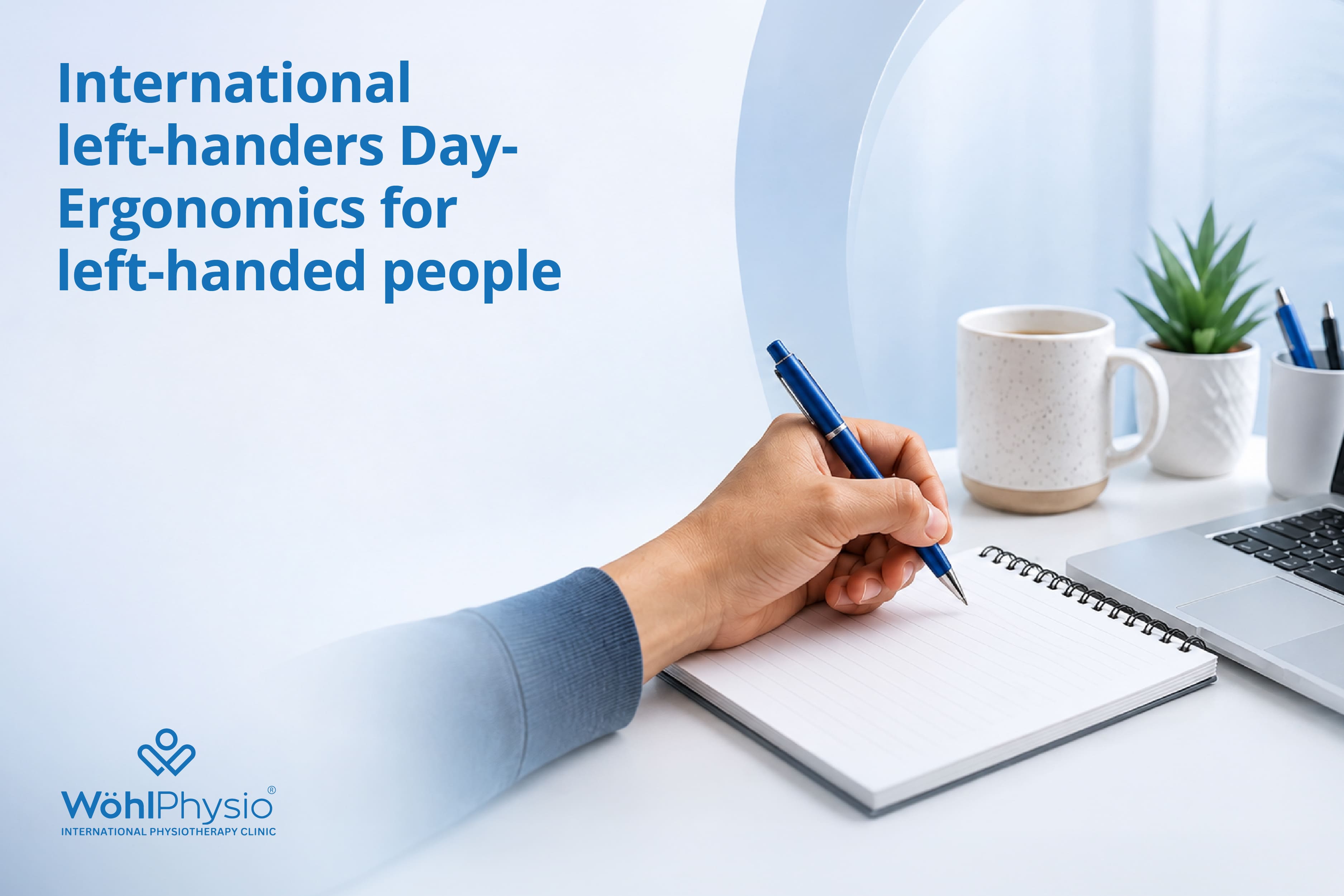
If you're left-handed, you already know the small daily frustrations: scissors that won't cut straight, spiral notebooks that jam your wrist, desks with the writing arm on the wrong side. What most people don't realize is that these aren't just inconveniences; they're repetitive postural stressors that can quietly build into shoulder, wrist, neck, and back pain over years.
As one of the best physiotherapy clinics in Kerala, we see this pattern more often than you'd expect at WohlPhysio. Left-handed patients frequently walk in with strain injuries that trace back not to an accident or a workout but to a lifetime of adapting their bodies to right-handed tools, workstations, and furniture. This guide breaks down exactly how that happens and what you can do about it.
The World Really Is Built for Right-Handers
Roughly 10–12% of the global population is left-handed, yet the vast majority of everyday products are designed around right-hand dominance:
- Scissors and kitchen tools: blades angled for right-hand grip, forcing lefties to twist their wrist to see the cutting line
- Spiral-bound notebooks and desks - writing arm rests awkwardly over the spine or desk edge
- Computer mice and keyboards - number pads and mouse placement assume a right-handed user
- Power tools and machinery - safety guards and controls positioned for right-hand operation
- Classroom and office furniture - attached desk arms almost always sit on the right
Individually, these are minor accommodations. Repeated thousands of times a day, across years, they add up to real biomechanical strain.
How This Silently Strains Your Body
1. The "Hooked Wrist" Writing Posture
Many left-handed writers curl their wrist into a hook shape to avoid smudging ink and to see what they're writing. Over time, this awkward wrist flexion can contribute to tendon irritation, wrist pain, and even early signs of repetitive strain injury (RSI) similar to what we treat in patients with typing-related strain.
2. Shoulder and Neck Asymmetry
When desks, keyboards, or tools are positioned for right-handers, lefties often twist their torso or elevate one shoulder to compensate. Held consistently, this creates muscular imbalance between the left and right sides of the neck and upper back, a common contributor to chronic tension headaches and one-sided neck stiffness.
3. Elbow and Forearm Overload
Using right-handed scissors, can openers, or sports equipment forces the non-dominant muscles of the forearm to overwork just to stabilize the tool. This mismatch is a lesser-known but real contributor to elbow strain patterns.
4. Postural Compensation at Workstations
Fixed right-handed desks (especially the classic lecture-hall style with an attached arm) push left-handed people into rotated, side-leaning postures for hours. Sustained over school or work years, this kind of asymmetric loading can contribute to lower back pain and postural misalignment.
5. Sports and Gym Equipment
Gym machines, golf clubs, and certain sports gear are frequently designed with a dominant right-handed user in mind, which can subtly alter form and increase injury risk for left-handed athletes who never get properly reoriented equipment.
Signs Your "Left-Handed Strain" Might Be More Than Just Discomfort
- Recurring wrist or forearm pain, especially after writing or repetitive tasks
- One shoulder consistently higher or more rounded than the other
- Neck stiffness that's worse on one side
- Lower back discomfort after long periods at a desk
- Hand or wrist pain that flares with scissors, tools, or sports equipment
If any of these sound familiar, it's worth getting a proper postural and musculoskeletal assessment rather than assuming it's "just how your body is."
A Physiotherapist's Guide: What Lefties Can Actually Do
1. Get an ergonomic assessment, not just left-handed products. Left-handed scissors and pens help, but the bigger win is having your workstation: chair height, monitor position, keyboard, and mouse placement assessed and adjusted for your dominant side. This is exactly the kind of evaluation our physiotherapists carry out during ergonomic consultations.
2. Retrain the "hooked wrist" grip. A physiotherapist or occupational therapist can guide you through pen-grip and wrist-position retraining to reduce strain during writing and typing.
3. Address muscular imbalance early. Targeted stretching and strengthening for the neck, shoulders, and upper back can correct the asymmetry that builds up from years of postural compensation before it becomes chronic pain.
4. Choose adaptive equipment where it matters most. Left-handed kitchen tools, sports gear, and desks aren't gimmicks for someone doing a task hundreds of times a week; they meaningfully reduce cumulative strain.
5. Don't wait for pain to become chronic. Most of the strain patterns above develop slowly and are highly treatable with early physiotherapy intervention, manual therapy, corrective exercises, and posture retraining. Left untreated, they can progress into more stubborn conditions requiring longer rehabilitation.
Why See a Physiotherapist for This?
Left-handed strain isn't always obvious because it isn't caused by a single injury; it builds gradually from thousands of small compensations. This is precisely where an experienced physiotherapist adds value: identifying subtle asymmetries, movement compensations, and postural patterns that a general check-up might miss.
At WohlPhysio, recognized as one of the best physiotherapy specialists in India, our approach starts with a full postural and movement assessment, followed by a personalized treatment plan whether that's manual therapy, ergonomic correction, or a targeted strengthening program. You can read more about how we personalize care for every patient in our Family Wellness Package, which is designed to support every member of the household, regardless of which hand they favor.
If you're dealing with wrist, shoulder, neck, or back discomfort that you suspect might be linked to being left-handed in a right-handed world, our team at WohlPhysio, trusted as the best physiotherapist in Kochi, can help you get to the root cause.
Find the Right Care, Close to You
Looking for the best physical rehab facilities near me? WohlPhysio operates as a full center for physical therapy across multiple branches, including Sreekaryam, Jawahar Nagar, Aluva, Palarivattom, Panampilly, and Kakkanad — so expert care is always within reach. Explore our clinic locations to find the branch nearest you, or browse our physiotherapy services to see how we treat postural and repetitive strain conditions.
Book Your Assessment Today
You don't have to keep adapting your body to a world that wasn't designed for you. A short assessment with a qualified physiotherapist can identify the specific strain patterns affecting you and put you on a path to lasting relief.
Book an appointment with WohlPhysio, the best physiotherapy clinic in Kerala, and take the first step toward pain-free movement, no matter which hand you lead with.
Frequently Asked Questions
How long does it take to correct years of postural compensation?
It varies by individual, but many patients notice reduced discomfort within a few weeks of starting a targeted program. Long-standing imbalances may take longer, which is why early intervention matters.
What does a physiotherapy assessment for this actually involve?
It typically includes a postural evaluation, a review of your daily workstation or tool setup, and a movement assessment to spot compensation patterns followed by a personalized plan that may include ergonomic advice, stretching, strengthening, or manual therapy.
Is being left-handed actually linked to body pain?
Not directly, but the tools, furniture, and workstations designed for right-handers often force left-handed people into awkward postures and grips. Repeated daily over years, this compensation can contribute to wrist, shoulder, neck, and back strain.