Posture Care for Teachers: Preventing Back & Neck Pain in the Classroom
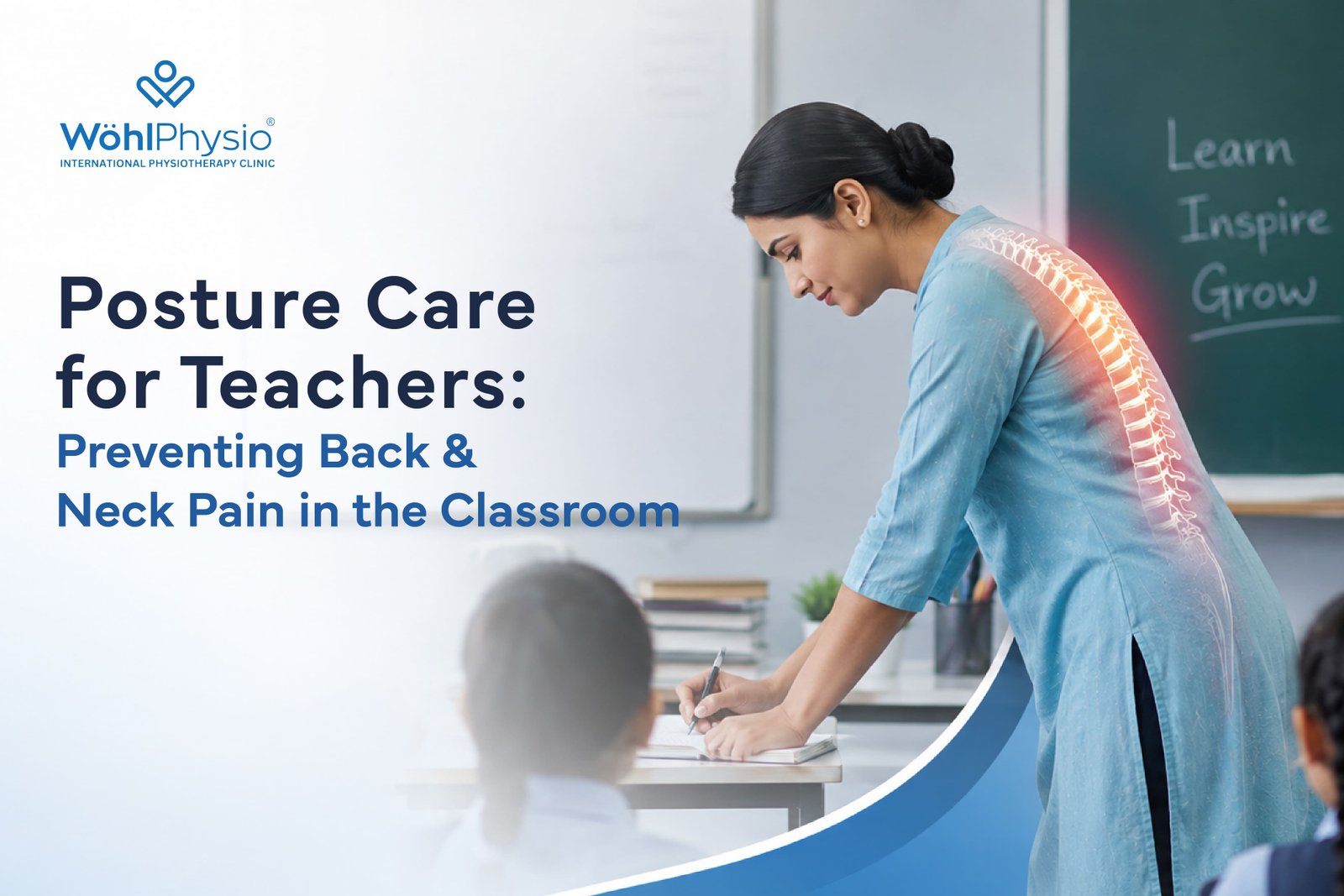
Teaching looks like a desk job from the outside, but anyone who has spent a full day on their feet in a classroom knows better. Standing for hours at the whiteboard, bending over student desks, carrying stacks of books, and twisting to write on the board while talking to a class it all adds up. Over months and years, these small daily strains can turn into chronic back and neck pain that affects both teaching performance and quality of life.
This blog breaks down why teachers are so prone to postural pain, practical ways to protect the spine during the school day, and when it's time to see a physiotherapist.
Why Teachers Are Especially Prone to Postural Pain
Unlike a typical office role, a teacher's day is a mix of prolonged standing, repetitive bending, awkward reaching (think writing on the top corner of a whiteboard), and carrying heavy bags of books or teaching materials. A few specific habits make things worse:
- Standing on hard floors for hours without supportive footwear, which increases strain up through the knees, hips, and lower back
- Twisting at the waist repeatedly to write on the board and then turn back to face the class
- Leaning over student desks for long periods while checking work, which rounds the shoulders and strains the neck
- Carrying heavy bags on one shoulder, pulling the spine out of alignment over time
- Sitting on poorly designed staff-room chairs during the few breaks available, offering little lower-back support
None of these are dramatic injuries on their own, but repeated daily strain is exactly how chronic postural pain develops.
Common Pain Patterns Seen in Teachers
At the clinic, we typically see three recurring complaints among teaching staff:
- Neck and upper back stiffness from looking down at papers or up at a whiteboard for long stretches
- Lower back pain from standing on hard floors and bending repeatedly without support
- Shoulder and wrist strain from carrying bags and writing on boards for extended periods
Left unaddressed, these patterns can progress into more serious spinal issues. Persistent poor posture combined with repetitive strain is a known contributor to conditions like physiotherapy treatment for disc bulge cases, and nerve compression problems that need physiotherapy treatment for sciatica. Teachers with an existing spinal curve should also be mindful long hours of asymmetric standing and bag-carrying can aggravate conditions that require physiotherapy treatment for scoliosis.
Practical Posture Tips for the Classroom
The good news is that most of this is preventable with a few consistent habits.
1. Mind your standing posture at the board Keep weight balanced on both feet rather than shifting onto one hip. Stand close enough to the board that you don't need to overreach, and turn your whole body rather than twisting just your spine.
2. Adjust your bending technique When leaning over a student's desk, bend from the hips and knees rather than rounding the lower back. A quick crouch or a chair pulled alongside the desk saves the spine a lot of repeated strain.
3. Choose supportive footwear Cushioned, well-fitted shoes reduce the impact that travels up through the legs and spine during long hours of standing.
4. Rethink your bag Switch from a single-shoulder bag to a backpack or a bag you alternate between shoulders, and keep the load as light as possible.
5. Take micro-breaks. Even 30 seconds of standing tall, rolling the shoulders back, and taking a few deep breaths between classes can reset posture before strain builds up.
6. Set up the staff room sensibly where possible, use a chair with proper lower-back support during free periods, and avoid slouching over a laptop or notebook.
Simple Stretches to Do Between Classes
- Chin tucks: Gently draw the chin back to release tension in the neck, hold for 5 seconds, repeat 10 times
- Shoulder rolls: Roll the shoulders backward in slow circles for 10–15 repetitions
- Standing back extension: Place hands on the lower back and gently arch backward to counter forward bending
- Chest opener stretch: Clasp hands behind the back and gently lift to open the chest and counteract rounded shoulders
- Calf raises: A few sets during breaks help circulation after long periods of standing
These take under two minutes and can be done between periods without any equipment.
When to See a Physiotherapist
Occasional stiffness after a long day is normal. But it's worth booking an assessment if you notice:
- Pain that persists beyond a few days of rest
- Numbness, tingling, or pain radiating down an arm or leg
- Pain that worsens with standing or bending, rather than improving
- Reduced range of motion in the neck or back
- Pain that disrupts sleep or daily activities
A physiotherapist can assess whether the issue is simple postural strain or something that needs a structured treatment plan, and can also guide recovery for staff managing broader health needs from ergonomic-related back pain to more complex cases like physiotherapy for stroke recovery, which shows just how wide the scope of physiotherapy care really is, from prevention to full neurological rehabilitation.
Why the Right Physiotherapy Support Matters
Not every ache needs a clinical visit, but persistent or worsening pain is your body telling you something needs attention. Choosing the best physiotherapy clinic in India means working with a team that looks beyond just the painful area assessing posture, movement patterns, workplace ergonomics, and lifestyle factors together.
At WohlPhysio, our best physiotherapy specialists in India work with teachers and other professionals who spend long hours on their feet, building personalized plans that combine hands-on treatment, corrective exercises, and posture education. If you're a teacher dealing with recurring back or neck pain and searching for the best physical rehab facilities near me, our clinics across Kerala are set up to help you get back to a pain-free classroom routine.
Final Thoughts
Good posture isn't about standing perfectly still all day it's about moving smartly, resting when needed, and catching small strains before they become chronic problems. A few mindful adjustments to how you stand, bend, and carry your bag can make a real difference over a school year. And if pain is already affecting your teaching day, don't wait it out a proper physiotherapy assessment can get you back to the classroom feeling stronger and more comfortable.
Frequently Asked Questions
Q: Why do teachers get back pain more than people in typical desk jobs?
A: Teaching combines prolonged standing, repeated bending, and carrying heavy bags — a mix of strains that desk-based roles don't usually involve.
Q: Can posture correction alone fix chronic back pain?
A: Posture correction helps prevent and manage mild to moderate pain, but persistent or radiating pain should be assessed by a physiotherapist to rule out underlying issues like disc bulge or sciatica.
Q: How often should teachers do posture stretches during the day?
A: Ideally between every class or at least every couple of hours short, frequent breaks are more effective than one long stretch session at the end of the day.
Q: When should a teacher consider physiotherapy instead of home remedies?
A: If pain lasts more than a few days, worsens with activity, or comes with numbness or tingling, it's time to book a physiotherapy assessment rather than relying on rest alone.