Why Physiotherapists Matter Most When the Weather Changes
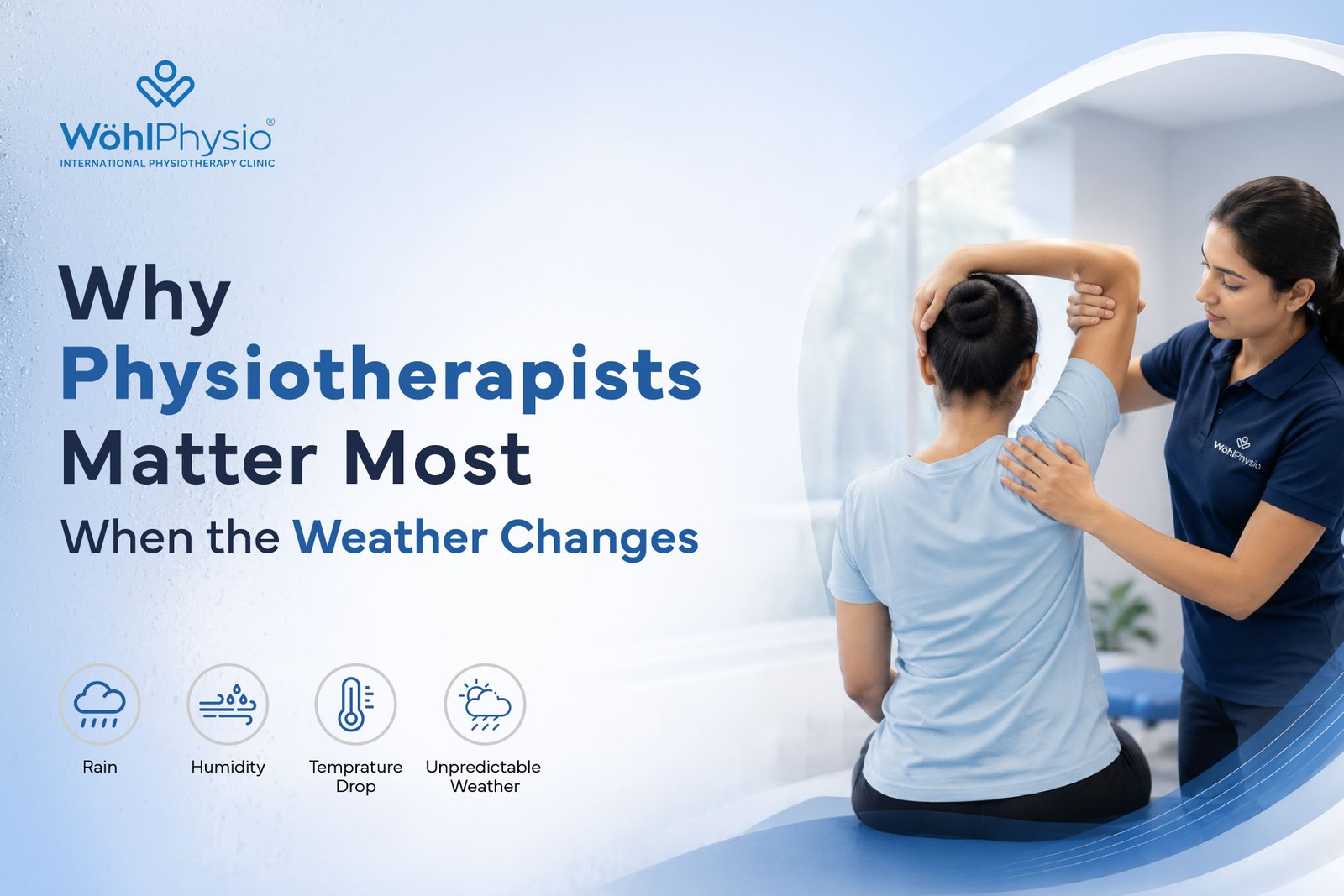
As the monsoon eases and Kerala moves into September, many of us notice something odd our joints feel stiffer, old injuries "act up," and everyday movement feels heavier than usual. It's not in your head. This seasonal shift is real, and it's exactly the kind of problem physiotherapy is built to solve.
With World Physical Therapy Day coming up on September 8, this is the perfect time to talk about why physiotherapists matter most precisely when the weather and your body starts changing.
Why Does Pain Flare Up After the Monsoon?
A few things happen in the post-monsoon transition that make joints and muscles more reactive:
- Reduced activity levels. Weeks of staying indoors during heavy rain mean less movement, which leads to muscle stiffness and joint deconditioning.
- Humidity changes affect tissue and circulation. Shifts in atmospheric pressure and humidity can influence blood flow to joints, especially in people with arthritis or old injuries.
- Sudden return to activity. As the weather clears, many people jump back into walks, sports, or gym routines too quickly, a common cause of strains and flare-ups.
- Old injuries resurface. Scar tissue and previously injured joints are often more sensitive to changes in temperature and pressure. This is especially common in people managing conditions like a disc bulge or sciatica, where nerve-related pain can flare up with weather and posture changes.
This Is Where Physiotherapy Comes In
Physiotherapy isn't just for post-surgery recovery or major injuries it plays a key role in exactly this kind of seasonal transition:
- Restoring mobility safely after weeks of reduced movement
- Targeted strengthening to protect joints as activity levels increase again
- Manual therapy and stretching techniques to ease stiffness and improve circulation
- Personalized movement plans so you don't overdo it and cause a new injury
- Pain management strategies that address the root cause, not just the symptom
5 Physiotherapist-Approved Tips for Post-Monsoon Recovery
- Ease back into activity gradually: increase intensity by no more than 10-15% per week.
- Prioritize dynamic stretching before activity and static stretching after.
- Stay consistent with movement, even light walking, rather than long bursts followed by rest.
- Support joints with proper footwear: post-monsoon surfaces can be uneven or slippery.
- Don't ignore recurring stiffness: it's often easier to treat early than after it becomes chronic.
Why World Physical Therapy Day Matters
World Physical Therapy Day, observed globally on September 8, exists to highlight the role physiotherapists play in helping people move, recover, and live independently not just after injury, but through everyday changes in health and lifestyle, including seasonal ones like this.
This year's global theme focuses on cardiovascular disease and stroke, a reminder that physiotherapy's impact goes far beyond joints and muscles. From guided mobility exercises to balance and strength training, physiotherapy for stroke recovery plays a critical role in helping patients regain independence proof that physiotherapy's role spans whole-body health, not just musculoskeletal pain.
When Should You See a Physiotherapist?
If seasonal stiffness or pain:
- Lasts more than a week without improvement
- Limits your daily activities or sleep
- Comes with swelling, warmth, or reduced range of motion
- Keeps recurring every time the weather shifts
...it's worth getting assessed rather than waiting it out.
At WohlPhysio, recognized among the best physiotherapy specialists in India, our team helps patients across Kochi and Trivandrum manage seasonal pain, sports injuries, and long-term joint health with personalized, evidence-based care. If you're searching for the best physiotherapist in Kochi or the best physiotherapy clinic in Kochi, our clinics across Kerala, widely regarded as one of the best physiotherapy centres in Kerala are here to help. This World Physical Therapy Day, take the first step toward moving better to book an appointment with us.
Frequently Asked Questions
Q: Why does my old injury hurt more during weather changes? A: Changes in barometric pressure and humidity can affect fluid levels around joints and scar tissue sensitivity, making old injuries more reactive to weather shifts.
Q: Is post-monsoon joint pain a sign of arthritis? A: Not necessarily — it can affect anyone due to reduced activity and humidity changes, but recurring or worsening pain should be evaluated by a physiotherapist.
Q: How long does post-monsoon stiffness usually last? A: With gradual activity and proper care, most people see improvement within 1-2 weeks. Persistent stiffness beyond that warrants a professional assessment.
Q: Can physiotherapy help even if I don't have a diagnosed condition?
A: Absolutely. Physiotherapists don't just treat diagnosed conditions — they help with general mobility, prevention, and recovery, which is exactly why World Physical Therapy Day highlights their broader role in health.
Q: Are certain people more prone to weather-related pain?
A: Yes, people with arthritis, old injuries, disc issues, sciatica, or post-surgical joints tend to be more sensitive to weather and seasonal shifts than others.