Monsoon Joint Pain in Kerala: Why It Flares Up and How Physiotherapy Helps
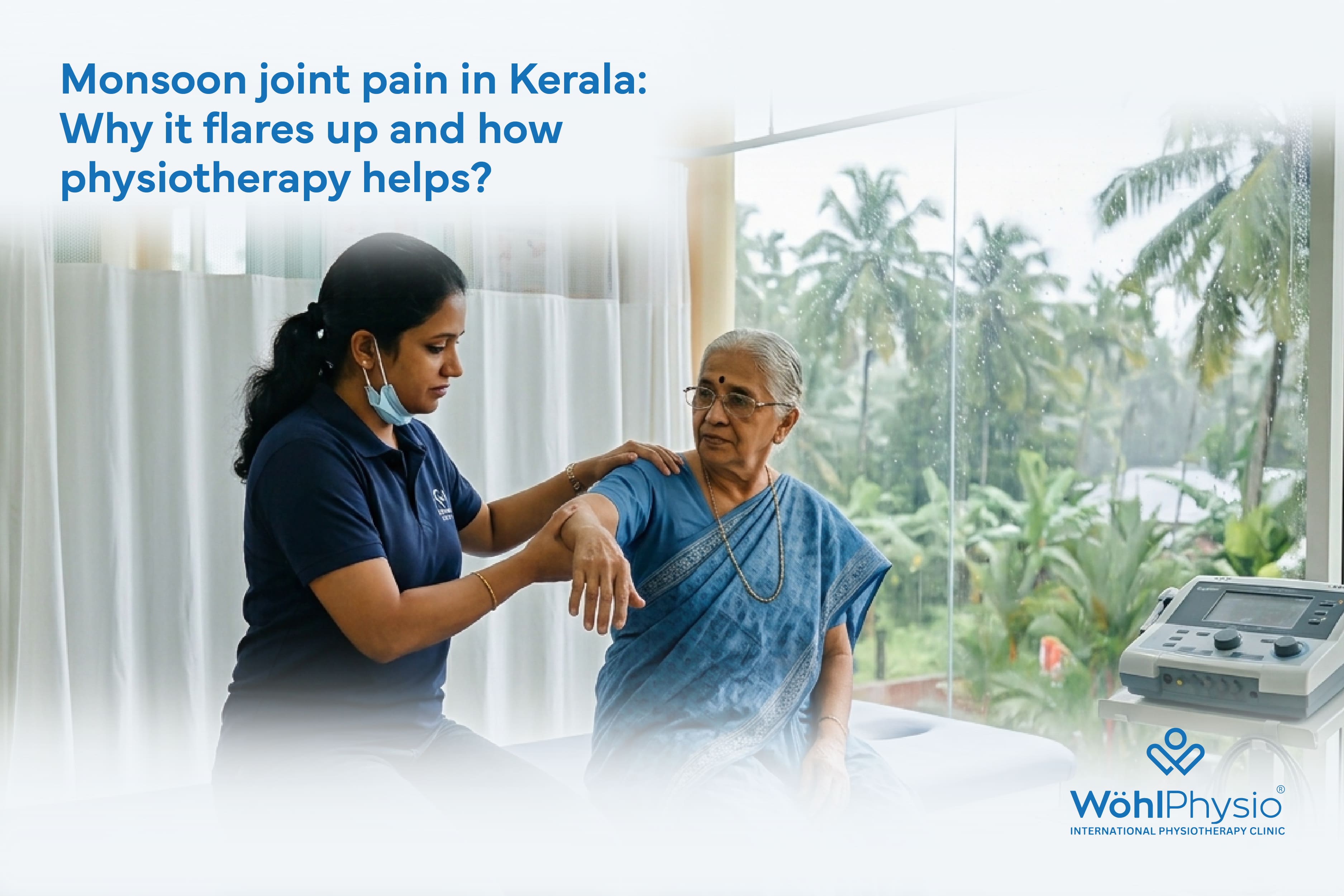
Every year, the moment the first monsoon clouds roll in over Kerala, my clinic sees the same pattern. Patients who've been pain-free for months suddenly call in with stiff knees, aching shoulders, and swollen fingers. If you're one of them, you're not imagining it, and you're definitely not alone.
As a physiotherapist who has treated joint pain across Kerala's humid, rain-heavy climate for years, I can tell you this seasonal flare-up is one of the most common complaints I see between June and September. Let's talk about why it happens and, more importantly, what actually helps.
Why Monsoon Makes Joint Pain Worse
1. Falling Barometric Pressure
As rain approaches, atmospheric pressure drops. Lower pressure outside the body means tissues around your joints - especially in the knees, shoulders, and fingers can swell slightly, pressing on nerve endings and increasing pain sensitivity. This is the single biggest reason arthritis and old-injury pain feels worse right before or during rain.
2. Cold and Damp Muscles
Kerala's monsoon brings a drop in temperature along with constant humidity. Cold, damp air makes muscles and tendons around joints stiffer and less elastic, which reduces shock absorption and increases strain on the joint itself particularly for people with pre-existing conditions like osteoarthritis, rheumatoid arthritis, or old ligament injuries.
3. Reduced Physical Activity
Rain keeps people indoors. Less walking, fewer outdoor routines, and longer hours sitting all lead to stiffer joints and weaker supporting muscles — a cycle that quietly worsens pain over the season.
4. Increased Synovial Fluid Viscosity
The fluid that lubricates your joints thickens slightly in cold, damp conditions, making joints feel "creaky" or harder to move first thing in the morning, a complaint I hear constantly during July and August in Kerala.
5. Old Injuries Resurface
Fractures, ligament tears, or surgical sites healed years ago often become sensitive again during monsoon. The scar tissue and altered biomechanics around these areas are more reactive to pressure and temperature changes than healthy tissue.
Who Is Most Affected
- People with osteoarthritis or rheumatoid arthritis
- Older adults with age-related joint degeneration
- Anyone with a previous knee, shoulder, or ankle injury
- Desk workers with sedentary daily routines
- People with vitamin D deficiency, which is common in Kerala despite the tropical climate, due to limited sun exposure during the rainy months
What You Can Do at Home
- Keep moving; even 15–20 minutes of indoor mobility exercises prevents stiffness from setting in
- Stay warm and dry. Damp clothes and cold floors aggravate symptoms; keep joints covered
- A warm compress over cold, gentle heat improves local blood flow and eases stiffness better than ice during this season
- Stay hydrated; dehydration thickens synovial fluid further
- Don't stop your regular walk entirely; shift it indoors or to a covered space instead
These steps help manage symptoms, but they don't address the underlying reason a joint has become vulnerable to weather changes in the first place. That's where best physio care comes in.
How Physiotherapy Helps With Monsoon Joint Pain
This is the part patients are often surprised by: physiotherapy isn't just for post-surgery recovery. For monsoon-related joint pain, it addresses the actual mechanics behind the flare-up:
1. Targeted mobility and strengthening exercises A proper assessment identifies which muscles around the affected joint have weakened, and a personalized program rebuilds that support system so the joint isn't bearing a load it wasn't designed to handle alone.
2. Manual therapy Hands-on techniques - joint mobilization, soft tissue release, and gentle stretching - reduce stiffness and improve circulation to the joint far more effectively than rest alone.
3. Heat-based modalities Clinical heat therapy and therapeutic ultrasound can reach deeper tissue layers than a home compress, easing pain and improving tissue flexibility in stubborn cases.
4. Posture and movement correction Many monsoon flare-ups are worsened by compensatory habits people develop over months of reduced activity. Correcting posture and gait patterns takes pressure off the joint long-term, not just for the season.
5. Long-term prevention plan The goal isn't just to get you comfortable this monsoon; it's to build enough strength and mobility around the joint that next year's rains don't bring the same flare-up.
If you're dealing with recurring monsoon-related joint pain, it's worth getting a proper orthopedic physiotherapy assessment rather than waiting it out every year. Identifying the root cause, not just the seasonal trigger, is what actually breaks the cycle. And getting the best physio care early makes all the difference in how quickly you recover.
When to See a Physiotherapist
You shouldn't wait for the pain to become unbearable. Book a consultation if you notice:
- Joint pain that consistently worsens with weather changes
- Morning stiffness lasting more than 30 minutes
- Swelling around a joint that doesn't settle with rest
- Pain that's started limiting your daily activities
- A previous injury that's begun "acting up" again
At WohlPhysio, our physiotherapists work across our clinics in Palarivattom, Aluva, Panampilly Nagar, Kakkanad, Thiruvananthapuram (Jawahar Nagar and Pangappara), so expert joint pain care and the best physio care in Kerala is accessible, no matter which part of Kerala you're in. You can read more about why early physiotherapy intervention matters or explore our full range of physiotherapy departments to find the right care for your condition.
Monsoon joint pain is common, but it isn't something you have to simply endure every year. With the right assessment and a structured treatment plan, most people see significant, lasting improvement well beyond just getting through the rainy season.
Written from clinical experience treating seasonal joint pain across Kerala. For a personalized assessment of your joint pain, book a consultation with WohlPhysio today.
Frequently Asked Questions
1. Does rain actually cause joint pain, or is it just a myth?
It's not a myth. Falling barometric pressure, cold temperatures, and humidity all measurably affect joint tissue and nerve sensitivity. Research and clinical experience both support that weather changes, especially sudden drops in pressure, genuinely worsen joint pain in people with existing joint conditions.
2. Why do my knees hurt more in Kerala's monsoon even though I'm young and have no arthritis?
You don't need arthritis to feel it. Old sprains, ligament strains, past sports injuries, or even prolonged poor posture can leave a joint slightly more reactive to cold and damp conditions, even years later.
4. Can vitamin D deficiency make monsoon joint pain worse?
Yes. Reduced sun exposure during the rainy months often lowers vitamin D levels, which plays a role in bone and joint health. It's worth getting levels checked if joint pain is a recurring seasonal issue for you.
5. Should I stop exercising if my joints hurt during monsoon?
No, complete rest usually makes it worse. The key is switching to indoor, joint-friendly movement rather than stopping activity altogether. A physiotherapist can guide you on safe exercises for your specific condition.
Our Locations
You can avail of our specialized treatments at any of our clinics. Visit us at:
📍 Panampilly Nagar | Palarivattom | Kakkanad | Aluva | Sreekariyam | Jawahar Nagar
📞 Call or WhatsApp: +91 73560 48007
🌐 Visit our Website: www.wohlphysio.com
📲 Connect with us on social media: Facebook | Instagram | YouTube | LinkedIn | X (Twitter) | Threads | Pinterest | Tumblr